Your first rocket launch is a strange sort of spectacle. Nothing happens for an hour, then there's a wall of steam, a rumble you feel in your ribs, and a commentator talking fast about "max Q", "fairing separation" and a "nominal trajectory". It's easy to nod along and understand almost none of it.
The fix isn't a physics degree. It's about ten words. Learn them and the webcast stops being noise and becomes a story — you'll know what should happen next, and you'll notice straight away when it doesn't.
The Vehicle: What's Actually Flying
Payload
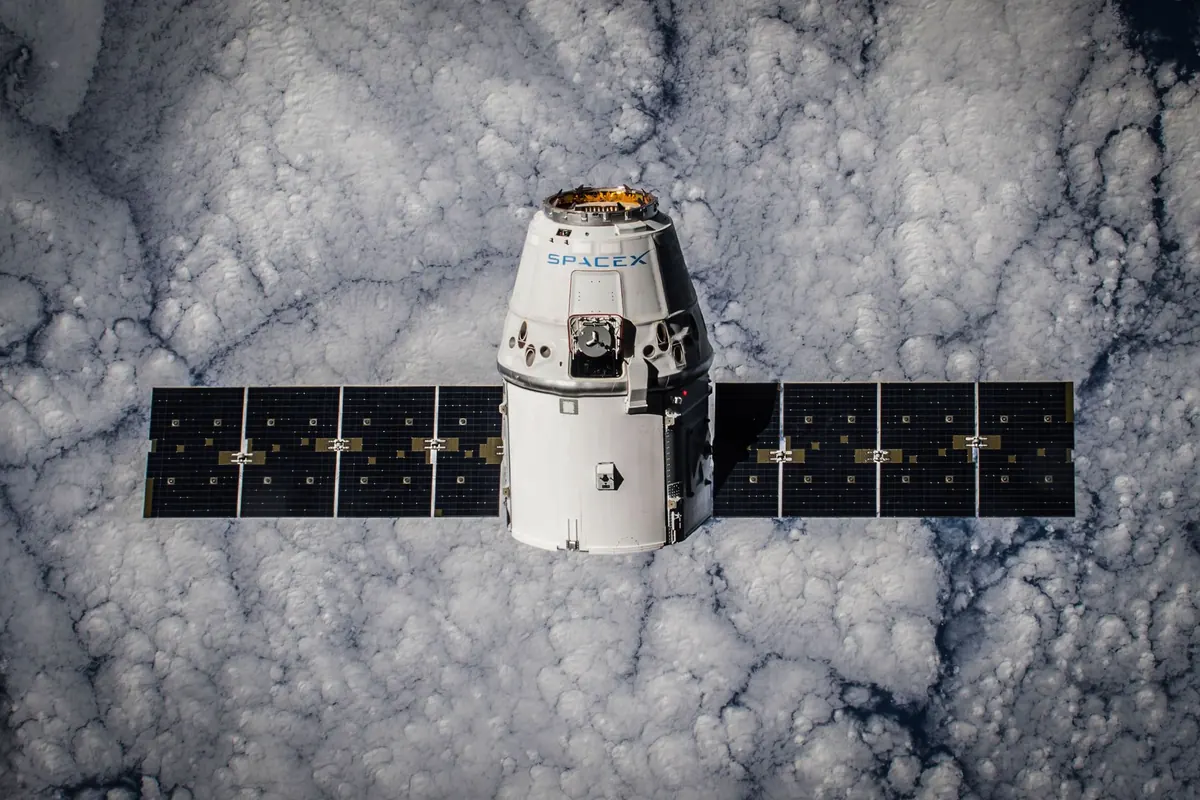
Everything the rocket carries that isn't the rocket: a satellite, a science instrument, a cargo capsule, a crew. Payload mass shapes every other decision — a heavier passenger means less margin, a different orbit, or a bigger vehicle. When a commentator asks "what's on board?", they mean the payload.
Fairing
The clamshell nose cone that protects the payload during the climb through the atmosphere, keeping it clean and at a workable temperature. Once the air is thin enough — usually a few minutes after liftoff — the two halves are jettisoned and fall away, and some are recovered for reuse. Crewed capsules generally don't fly under one; a launch escape system or the capsule's own abort motors occupy that space instead.
Stages
Rockets shed hardware as they climb. The first stage does the heavy lifting off the pad and through the lower atmosphere, then separates, and a second stage takes over. Two or three stages is typical. Stage separation is often the most dramatic thing you'll see on the webcast, and it's the moment the rocket stops being one machine and becomes two.
The Physics: Three Numbers Worth Knowing
Delta-v
Literally a change in velocity, measured in metres per second and usually quoted in kilometres per second. Delta-v is the total speed change a vehicle can produce, and it works like a budget: every manoeuvre has a price, and you either have the funds or you don't. Reaching low Earth orbit costs roughly nine to ten kilometres per second once you account for the losses caused by gravity and air resistance. Changing your orbital plane later costs more, sometimes much more. "We have delta-v in reserve" means there's money left in the account.
Specific impulse
Usually shortened to Isp, this is a measure of engine efficiency: how much thrust you get for each unit of propellant consumed per second. It's quoted in seconds, and higher is better — but a high-Isp engine often produces less thrust than a thirsty, powerful one. That trade-off explains why launchers use several engine types rather than one clever design.
Max Q
The point of maximum aerodynamic pressure on the vehicle, usually about a minute into flight. It is not the moment of maximum speed. Rockets often throttle down as they pass through it, so "throttling down for max Q" is a sign that everything is going to plan, not a sign of trouble.
The Ground Side: Telemetry, Countdowns and Windows
Telemetry
Telemetry is simply data sent from the vehicle to the ground: temperatures, tank pressures, engine health, acceleration, attitude. Flight controllers watch it on rows of screens. Losing telemetry is not the same as a failure — it means the team has gone blind and will usually wait before commanding anything.
T-minus and holds
The countdown clock runs towards T-0, which is liftoff. Built-in holds are scheduled pauses used to catch up on checks; a hold that overruns can turn into a scrub, meaning the attempt is called off until another day. Most scrubs come down to weather or a technical concern, and they are routine rather than dramatic. After T-0, callouts switch to mission elapsed time, so you'll hear "plus two minutes" instead.
Launch window
The stretch of time during which launching will still put the payload where it needs to go. It can be hours long or just a few seconds, depending on the target. Windows are set by orbital mechanics, the position of whatever you're meeting, sometimes the angle of the Sun, and by the range and weather. When a launch slips to the end of a window, that's usually the reason.
Where It's Going: Orbits Without the Maths
Most confusion on launch day comes from the destination. Four terms cover the majority of missions.
- Low Earth orbit (LEO): a few hundred kilometres up. The International Space Station lives here, along with most small satellites and internet constellations.
- Sun-synchronous orbit (SSO): a near-polar orbit that passes over the same part of Earth at roughly the same local time each day, which is why Earth-imaging satellites like it.
- Geostationary orbit (GEO): about 35,786 km above the equator, where a satellite's orbit matches Earth's rotation and it appears fixed in the sky. Communications and weather satellites gather here.
- Geostationary transfer orbit (GTO): an elliptical drop-off orbit. The launch vehicle does the hard part; the satellite's own engine finishes the job and circularises.
Apogee and perigee
The highest and lowest points of an orbit around Earth. Around other bodies they're called apoapsis and periapsis. A stretched orbit — high apogee, low perigee — is useful because a satellite can burn its engine at apogee to raise the low point, which takes far less fuel than doing it anywhere else.
How to Watch Your First Launch Like You Know What You're Doing
Reading these ten terms is enough to follow along properly. A little preparation makes it better still.
- Spend two minutes finding out the payload and the target orbit before the webcast starts. Everything else makes more sense once you know where the thing is going.
- Write down four moments: max Q, main engine cutoff, stage separation and payload separation. Tick them off as they happen.
- Listen for the word "nominal". It means as expected. "Off-nominal" means something isn't.
- Note the first-stage landing, if the rocket is reusable. That happens on a separate timeline and is often the best part.
- Expect a scrub at some point. Have something else planned.
Launch coverage in the UK has grown livelier as spaceports in Cornwall and Shetland work towards regular flights, and providers stream their own countdowns with the callouts intact. Watch the official feed rather than a reaction channel and you'll hear the real thing.
None of this makes you a flight controller. It does make you a better watcher: you'll follow the story rather than the noise, and you'll know the difference between a planned event and a problem.
Photo: 2780243 / Pixabay