A team in a UK university lab has a payload, a deadline and a budget that will not stretch. Someone suggests a 3U CubeSat. Someone else points out that a slightly larger smallsat would give the power and aperture the mission actually needs. Both are right, and the argument will run for weeks unless somebody frames the decision properly.
CubeSats and smallsats are not rivals. One is a standard; the other is a size bracket. Working out which constraint is genuinely biting on your mission — volume, power, cost, schedule or regulation — is what turns a circular debate into a decision.
Start with the naming, because it clears up half the confusion
CubeSat describes a form factor. One unit, or 1U, is a cube roughly 10 cm on each side, with a mass of around 1.3 kg. Stack them and you get 2U, 3U, 6U or 12U. The standard dates from the late 1990s, created so that small spacecraft could share standard deployers. That is still the whole point: you inherit mechanical, electrical and launch interfaces that other people have already solved.
Smallsat is a much looser label. It covers everything from a 1 kg technology demonstrator up to spacecraft of a few hundred kilograms. CubeSats sit inside that family. So do microsatellites with bespoke structures, custom avionics and deployable solar arrays.
The real choice, then, is between a standardised, largely off-the-shelf platform and a custom small spacecraft. Almost everything else follows from that.
What a CubeSat genuinely does well
For a first mission, the standard route is attractive for concrete reasons:
- Structures, flight computers, radios, power boards and attitude control are available off the shelf, often from suppliers whose units have already flown.
- Deployers and separation systems are standardised, which widens the number of launch opportunities you can be accepted onto.
- Integration and testing can happen in a university cleanroom or a small lab rather than a large facility.
- The team can stay small. A focused 3U mission is a realistic scope for a dozen committed people.
The trade-off is that you inherit the standard's limits. A typical 3U CubeSat offers a few watts of orbit-average power, a modest downlink and very little room for propulsion or a large antenna. Pointing accuracy and thermal control are harder in a small, tightly packed box. If your payload needs a 20 cm aperture, a couple of hundred watts, or station-keeping, no amount of clever engineering will fold it into 3U.
When your payload outgrows the box
Move up a size when the payload demands it, not when ambition does. The usual triggers:
- An optical instrument needing a longer focal length or a larger mirror.
- Propulsion for orbit maintenance, formation flying or a controlled deorbit.
- Higher power for active instruments or a high-rate downlink.
- Physical room for redundancy, shielding, or simply to assemble the thing without tweezers.
A larger smallsat buys margin — thermal, power, mass and schedule. That margin is not glamorous, but it is what turns a design that should work into one that does. The price is a bespoke structure, longer integration, more involved testing, a heavier launch bill and a longer path through licensing.
Match the bus to the payload, not the other way round
Write your payload specification first: mass, volume, power, pointing, thermal, and how much data you need to downlink each day. Then find the smallest platform that meets all of it with margin. Remember that the CubeSat standard has stretched — 6U and 12U buses with deployable arrays, propulsion and higher-power radios are now normal. If 6U fits, you have not left the standard behind.
Launch: the rideshare reality
Nearly every first mission flies as a secondary payload. Your satellite is a passenger, and the primary customer's orbit and schedule set the rules. You take the orbit you are given, and you wait when the launch slips.
- Rideshare on a large launcher, usually through an integrator that handles the deployer, shipping, insurance and paperwork.
- A dedicated small launcher, worth considering only if your orbit genuinely cannot be reached any other way.
- Deployment from the International Space Station, which suits very small CubeSats and educational missions but constrains orbit and materials.
- A UK launch site. SaxaVord in Shetland and Sutherland in the north of Scotland are in development; availability depends on who is flying and when.
Two practical habits save a lot of pain. Book your deployer before you freeze the structure, because the chassis has to match it. And design for a long wait on the pad, a rough ride uphill, and a satellite that can be switched off until it is released.
Regulatory and spectrum work starts earlier than you think
In the UK, launching or operating a satellite requires a licence from the Civil Aviation Authority, under the Outer Space Act or the Space Industry Act depending on where the launch takes place. Expect to explain your mission, your debris mitigation plan, your insurance arrangements and your financial responsibility. Guidance is published by the regulator; for a first mission, take professional advice before signing a launch contract.
Radio spectrum is a separate process through Ofcom, and it often takes longer than teams expect. An international filing through the ITU can run for years, which is why many university groups use amateur satellite bands instead, with a notice of variation and coordination with the amateur satellite community. That route comes with real limits on power, bandwidth and encryption, so check it suits your payload before designing around it.
Two more items catch first-timers out: export controls on certain components and technical data, and the licence required for your ground station. Neither is insurmountable, but both take time.
Licensing rules change and depend on your specifics. Treat the above as a prompt to ask questions, not as legal advice, and speak to the regulator and a lawyer with space experience early in the programme.
A short checklist for choosing
- Write the payload specification first — mass, volume, power, pointing, thermal, data volume per day.
- Add margin, then test 3U, 6U and 12U against it before considering a custom bus.
- Check launch accommodation for that size: are deployers available, and on what kind of mission?
- Cost the whole mission, not the spacecraft: launch, deployer, integration, testing, ground station, operations, licensing, insurance.
- Be honest about the team. A 6U with propulsion needs more systems experience than a 3U beacon mission.
- Line up your licensing and spectrum timeline against your intended launch date.
- Define the simplest meaningful success — a beacon heard, one image downlinked — and let that set scope.
Practical next steps for UK teams
Talk to people who have already flown something. The student space network, ESA's Fly Your Satellite programme and neighbouring university groups are generous with the details that never make it into datasheets. The Satellite Applications Catapult and the regional Space Enterprise Labs can point you towards facilities and expertise, and national laboratories offer testing and payload support.
Then do three unglamorous things. Buy your deployer early. Budget properly for operations, because the mission is not finished at launch, and a ground segment costs more than most first teams assume. And design for a short life with a reliable deorbit, since that is both good practice and something the regulator will ask about.
Choose the smallest platform that meets your payload requirements with margin, and the rest of the mission gets easier.
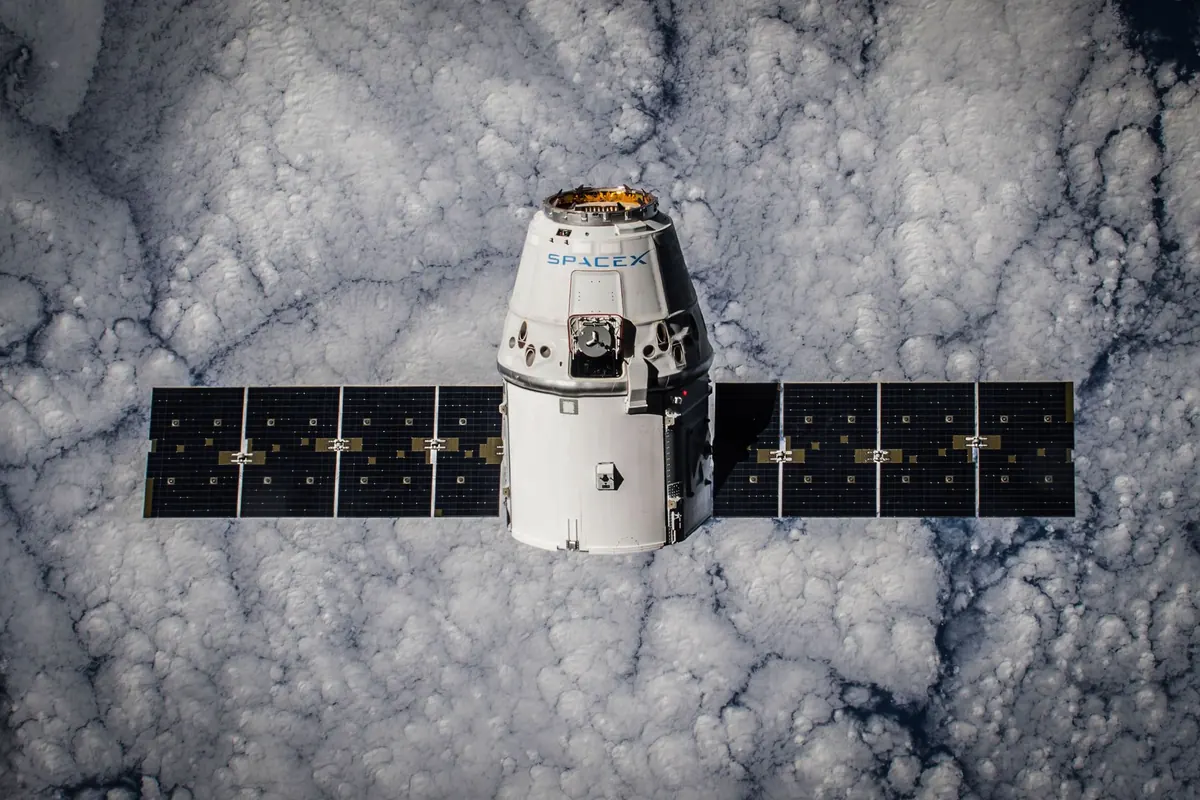
Photo: WikiImages / Pixabay